




-

Nutrition and rest to enhance the effectiveness of muscle training
 2020.09.30
This book explains the role and intake amount of protein needed to enhance muscle training, its function, and how to utilize it. It also introduces the relationship between rest, especially sleep, and muscle growth.
-

For those who want to enhance the effects of muscle training with "small amounts, high efficiency," whey protein with a high concentration of EAAs is recommended.
2023.09.11This book explains the important nutrition and rest required for efficiently increasing muscle mass and strength through strength training. It also introduces the characteristics of whey protein, which is rich in essential amino acids, how to take it effectively even in small amounts, and its relationship to fat loss.
-

[Special Discussion] Marathon Part 1: Training and diet to maximize performance
2021.11.05Moderate exercise is essential to live a healthy and fulfilling life. Whether you play sports every day in a club or run a few days a week aiming to participate in a marathon, daily training and diet are important. However, how much intensity should you actually practice and what kind of food should you eat?
-

[Special Discussion] Marathon Part 2: Proper conditioning enhances peak performance
2021.12.09When you play sports on a daily basis, you should be aware of your training and diet. Regardless of the intensity of your exercise, supplementing with nutrients such as amino acids is essential for a healthy life. For those who take care of their bodies on a daily basis, we would like to hear from a leading strength and conditioning expert.
The basics of supplementary foods and how to use them
Muscle-building proteins and amino acids

Our bodies are made up of 60% water and half of the remaining 40%, or 20%, protein. It may be easy to imagine that "muscle = protein", but skin, hair, hormones, and enzymes are also made up of protein. Amino acids are the building blocks of proteins that perform various functions in the body. There are only 20 types of amino acids that make up proteins. Various combinations of these 20 types of amino acids create proteins that perform various functions in the body.
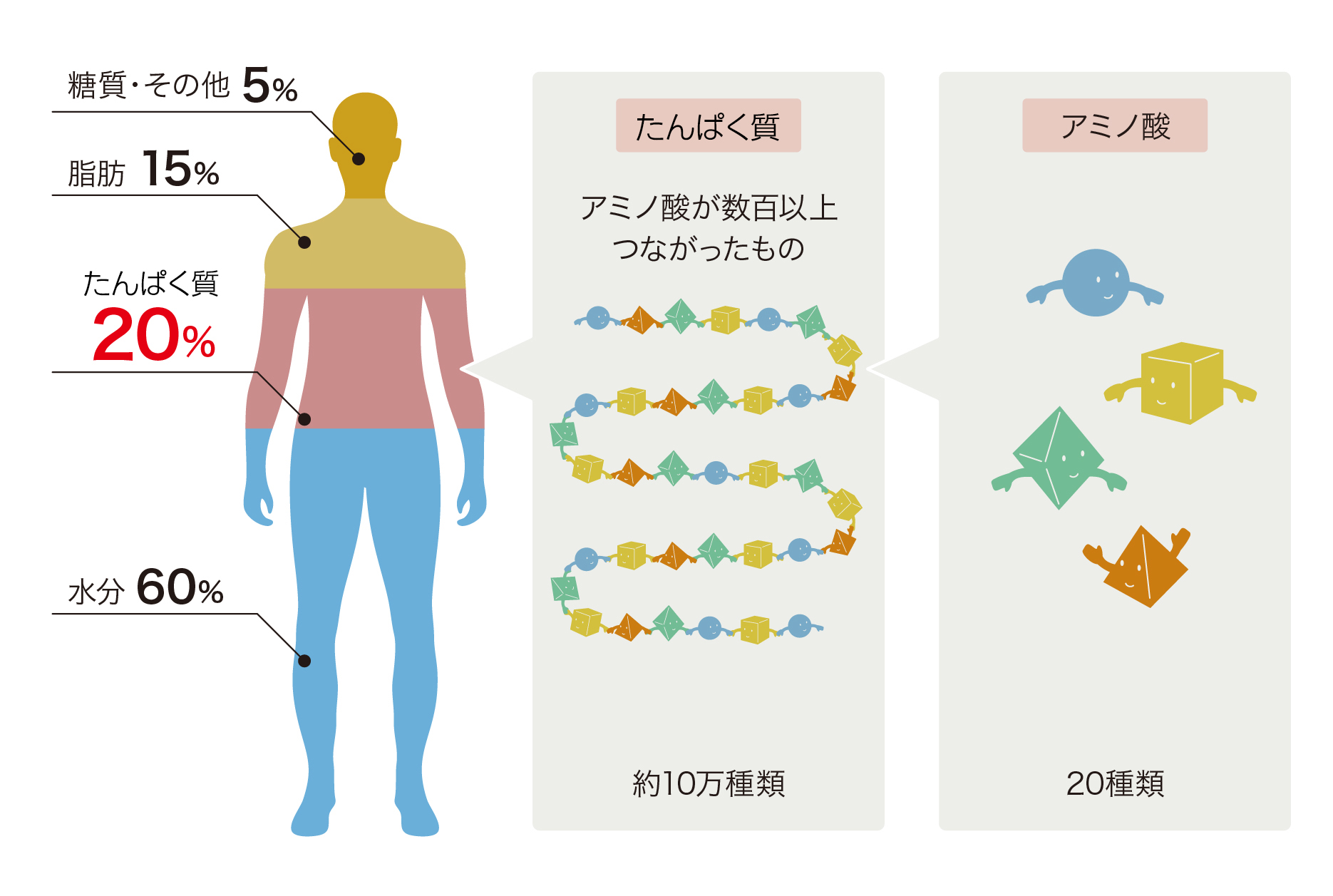
Protein breakdown and synthesis and the need for supplements
The body is made of proteins, which are broken down and synthesized repeatedly every day (this is called metabolism). Broken down proteins (which become amino acids as a result of their breakdown) undergo various metabolic processes and are ultimately excreted in the urine.
In other words, in order to resynthesize the broken down proteins, the raw amino acids (proteins) need to be taken in through meals or supplements.
The effects and uses of amino acids that support the resynthesis of broken proteins
To reduce muscle pain during sports and maintain physical condition, it is important to properly understand and utilize amino acids. Amino acids are not only the building blocks for muscle building, but also play a major role in performance during and after exercise.
This article will summarize the roles of 20 types of amino acids and explain the functions and utilization of amino acids that are important in sports. Learn how to incorporate amino acids to perform well in training and games.
If a lot of protein is broken down and little of the raw protein is consumed, less protein will be produced and the balance cannot be maintained.
(Example: Muscles are not growing, skin is rough, etc.)
Of course, taking in enough protein also allows it to be used for muscle synthesis.Increased muscle protein synthesis leads to increased muscle mass, which leads to increased strength, recovery from muscle fatigue, and muscle conditioning, all of which contribute to better performance.
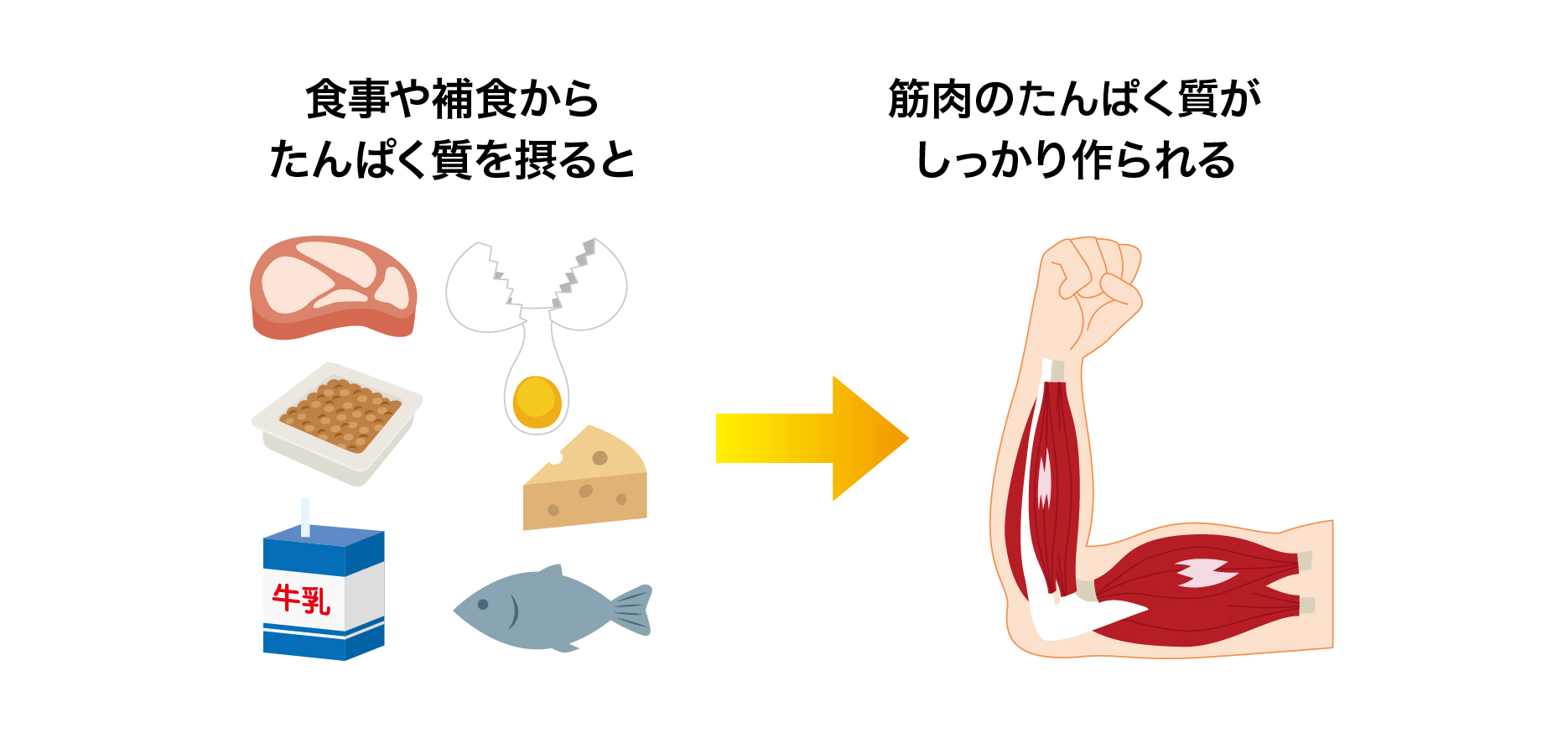
From the perspective of building a strong body, athletes need to think about consuming protein and amino acids from their meals and foods.
Whey protein with a high concentration of essential amino acids to support protein replenishment
It is very difficult to get the necessary protein from food. Taking in protein as a supplement can be an easy way to get the necessary protein, but there are problems such as taking in a large amount at one time and feeling full.
Ajinomoto Co., Inc. has focused on essential amino acids and discovered a "high-essential amino acid whey protein" that provides the same effects as regular protein by consuming only one-fourth the amount. Here we explain the mechanism and effects of "high-essential amino acid whey protein."
*Click here for tips on building a body that performs better
Concept of complementary feeding

The difference between a snack and a meal
Students who participate in club activities 4-5 days a week and active athletes need a lot of energy and nutrients, and three meals a day may not be enough. For this reason, they consume "complementary foods" to "supplement" the energy and nutrients they cannot get from meals. Naturally, these are considered to be different from snacks (between meals) such as snacks and cakes.
Recommended snacks before practice
Snacks are consumed for a variety of purposes, so the foods you choose will depend on what time of day you consume them.
For example, junior high and high school club members have high energy and protein requirements, so it would be a good idea for them to eat snacks containing carbohydrates and protein, such as rice balls, fish sausage, milk, cheese, or yogurt, before club activities.

Timing and examples of supplementary foods to take before a match
Let's think about snacks during a match by time of day. Two to three hours before the start of exercise, rice balls, udon noodles, castella cakes, and sweet bean buns are good choices as they are low in fat and relatively quick to digest. One to two hours before, bananas, fruit, 2% juice, and jelly drinks are good choices, while 3 minutes before, 1% juice, jelly drinks, supplements, and sports drinks are good choices. Basically, it's a good idea to aim to consume foods that are mainly high in carbohydrates within three hours of starting exercise.

Things to keep in mind when taking protein supplements
Protein is a nutrient necessary for muscle protein synthesis, so many athletes consciously consume it before and after exercise. However, since protein takes time to be digested and absorbed, when supplementing with protein, it is necessary to consider the type of food and the time it takes to be digested and absorbed.
Therefore, it may be a good idea to consider taking amino acids that do not require digestion.

As mentioned above, by considering the nutrients and timing according to your goals and incorporating supplemental foods, you can work to ensure that you perform well in your daily practice and during actual events.
<Supervisor>Shota Sasaki

Lecturer, Department of Health and Nutrition, Faculty of Human Sciences, Hokkaido Bunkyo University.
After completing her doctoral studies in applied life science at the Graduate School of Life Sciences, Kyoto Prefectural University (2011), she obtained her doctorate (academic), and worked as an assistant professor at Obihiro Otani Junior College before assuming her current position in 2019. She is a certified sports nutritionist and registered dietitian. She is also the editor of "Nutrition for Skiers" in the monthly magazine Ski Graphic.
To date, she has provided nutritional support primarily to junior and female athletes involved in speed skating and ice hockey. Currently, she is providing nutritional support to students aiming to become registered dietitians, as well as high school baseball and track and field athletes. Although still in the early stages of development, she is also working on a research project to find nutritional intake methods specific to sports played in cold environments. She aims to be a bridge between research in the field of sports nutrition and the field itself.