


-

The relationship between exercise and carbohydrate supplementation | How to utilize glycogen to improve endurance and performance
 2020.09.30
This book explains the important role of carbohydrates (glycogen) during exercise. It covers the energy intake before exercise, the recovery by replenishment of carbohydrates after exercise, the effect of glycogen depletion on endurance and performance, and the effective method of intake.
-

Utilize lipids as an energy source to improve endurance! How mitochondria work and how to increase them
2020.09.30Explains the important roles of carbohydrates (glycogen) and lipids during exercise. Also introduces the timing and method of carbohydrate replenishment, the impact of glycogen depletion on performance, and tips for improving endurance.
-

The effects of alanine and proline help utilize carbohydrate energy to maintain endurance and performance
2023.09.11The amino acids alanine and proline help convert carbohydrates into energy. We explain how they support glycogen utilization during exercise and maintain endurance. We also introduce tips that will help you replenish your energy and maintain your stamina.
-

The effects of cystine reduce fatigue caused by exercise and maintain energy efficiency
2023.09.11This article explains how the amino acid cystine protects mitochondria and enhances energy production. It also explains how it efficiently converts lipids into energy, reduces oxidative stress during exercise, and helps recover from fatigue and improve endurance.
-

[Special Discussion] Marathon Part 2: Proper conditioning enhances peak performance
2021.12.09When you play sports on a daily basis, you should be aware of your training and diet. Regardless of the intensity of your exercise, supplementing with nutrients such as amino acids is essential for a healthy life. For those who take care of their bodies on a daily basis, we would like to hear from a leading strength and conditioning expert.
The basics of a balanced diet
Balanced diet and nutrition

Many people may not know what a balanced diet is. A balanced diet is one in which you can get the necessary nutrients in the amounts you need.
Aiming for a "set meal" style diet, the basis for balanced meals
The basic form of a well-balanced meal is the set meal type. This includes a staple food, main dish, side dish, soup, milk/dairy products, and fruit. Each has a different role to play, so aim to have a full range of these!

[staple food] Source of energy for moving the body
[Main dish] A source of protein, the building blocks of the body
[side dish] A source of vitamins, minerals and dietary fiber to keep you healthy
[Soup (considered as a side dish)]
A source of vitamins, minerals and dietary fiber to keep you healthy
It has the effect of stimulating appetite
[Milk and dairy products]A source of protein and calcium for building strong bones and muscles
[fruit] A source of carbohydrates, vitamin C, and fluids to help absorb iron and combat stress
Maintaining a balanced diet throughout the day
However, preparing a balanced diet for every meal can be difficult and stressful. For this reason, it is a good idea to think of your diet as a daily balance, rather than just one meal. By having a staple food, main dish, side dish, soup, milk/dairy products, and fruit throughout the day, you can get closer to a balanced diet. Also, if you cannot get enough of all your nutrients in three meals, adding supplementary foods can help you make up for any energy or nutrients that you may be lacking.

The amount of nutrients you need varies depending on the amount, quality, and frequency of exercise.
The amount of energy and nutrients needed varies greatly depending on whether or not you have an exercise habit, and the amount and quality of exercise you do. For example, students and athletes who participate in club activities 4-5 days a week require much more energy and nutrients than the average person.

When considering the amount of protein that should be consumed per day, the average person should consume approximately 1.0g per kg of body weight per day, but athletes are advised to consume 1.2 to 2.0g per kg of body weight per day (84 to 140g per day for a 70kg person). Therefore, athletes need to use supplements to efficiently consume protein in order to make up for the amount they cannot obtain from three meals a day.
As mentioned above, by combining three meals based on a set menu with snacks, you can achieve a balanced diet and nutritional intake throughout the day.
Digestion and absorption of nutrients

The five major nutrients that support life activities and their roles
Our bodies are made up of five major nutrients: carbohydrates, lipids, proteins, vitamins, and minerals. These nutrients are taken in through the mouth, digested and absorbed in the digestive tract, and used in the body.
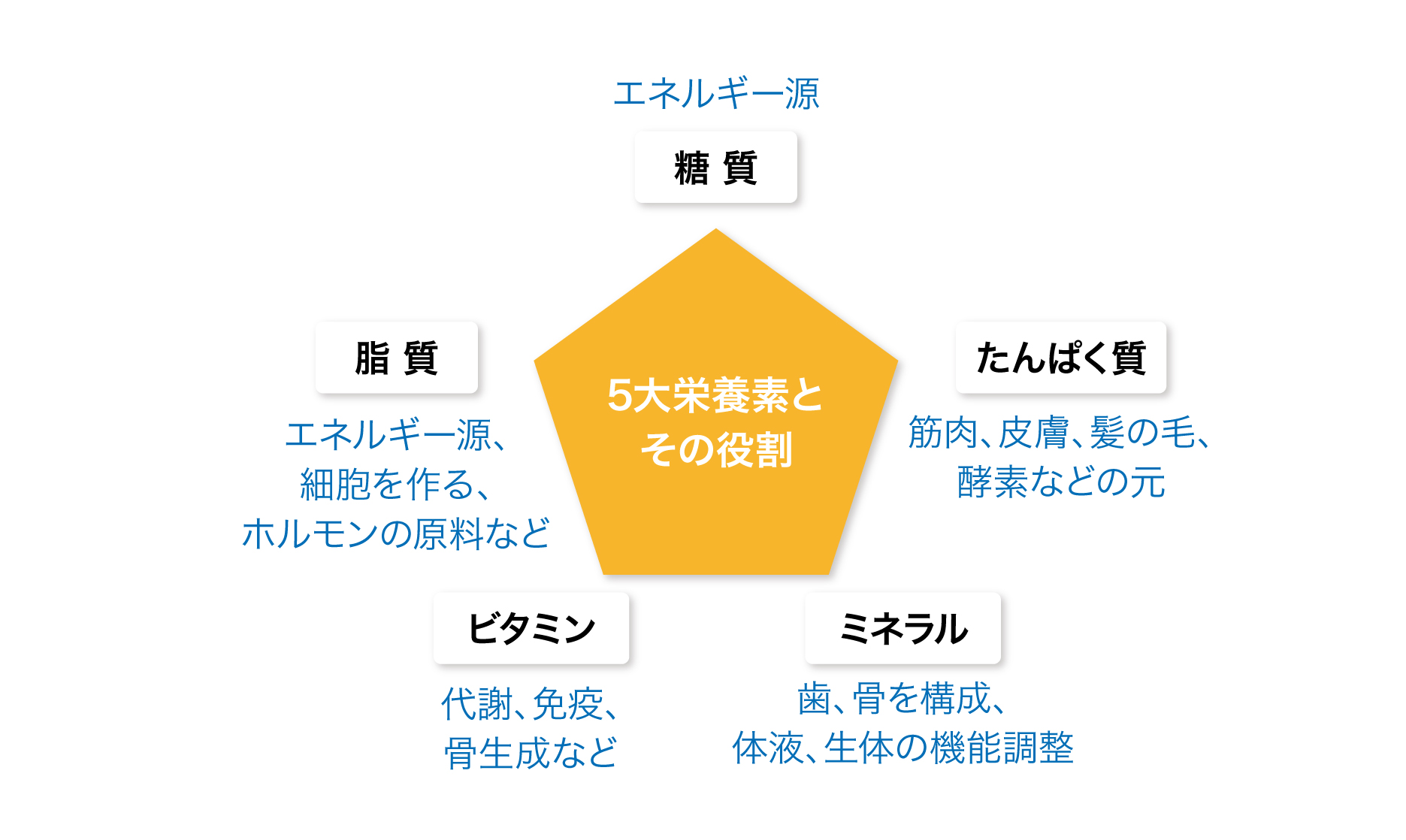
- ●Carbohydrates are primarily used as a source of energy for activity.
- ●In addition to being used as an energy source, lipids also protect the body as body fat, and are components of cells and raw materials for hormones.
- ●Protein is the main nutrient that builds the body, and is the source of muscles, skin, hair, hormones, enzymes, etc.
- ●Vitamins help with energy metabolism and are involved in bone formation and immune function.
- ●Minerals play a role in forming the body, such as teeth and bones, and also in regulating body fluids and biological functions.
All of these nutrients are essential for life and, of course, are also essential for those who engage in sports or exercise.
Carbohydrates, lipids, and proteins are broken down by digestive enzymes secreted in the mouth, stomach, and small intestine, and are mainly absorbed in the small intestine.
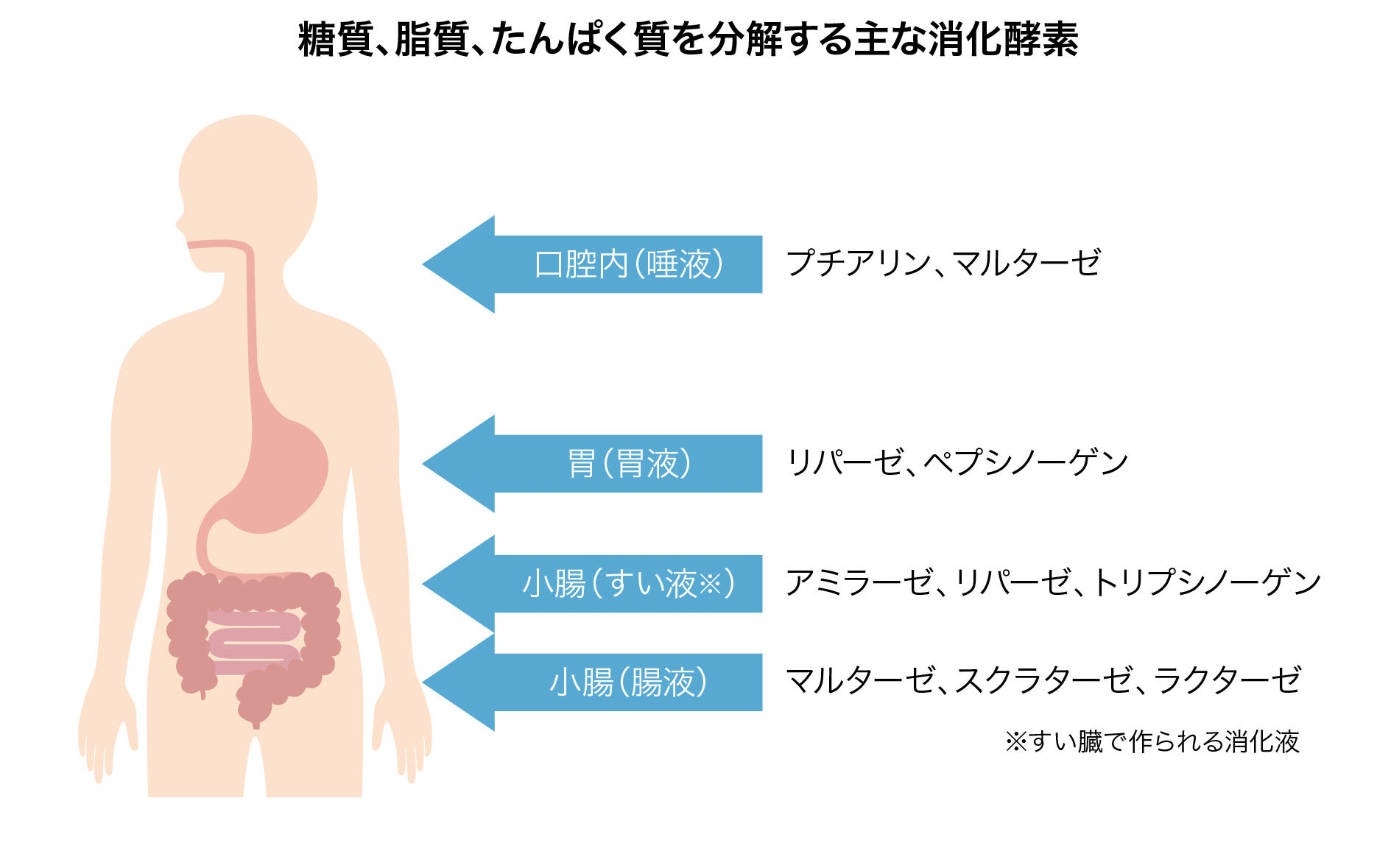
Depending on the foods you eat and the combination of foods, it can take about 3 to 4 hours for them to be digested and absorbed. The reason you're told to finish eating 3 to 4 hours before starting exercise is because of the time it takes for digestion and absorption to occur.
Things to note about eating before exercise | Digestion time and absorption of food

In addition, when replenishing energy just before or during exercise, it is best to consume beverages or jelly foods that do not require digestion, taking into consideration the strain on the stomach and intestines.
For these reasons, athletes need to be conscious not only of what they eat, but also of how they digest and absorb food after eating. Even if you think about eating a balanced diet, it is meaningless if the nutrients contained in the food do not enter the body and are not used. In order to perform better, it is also necessary to reconsider how you eat.
Nutrients that provide energy for exercise

In order to exercise vigorously, we need sufficient energy. So where does this energy come from?
The energy we use for activity is produced in our bodies when the carbohydrates, lipids, and proteins we take in through meals and snacks are converted into energy.
Carbohydrates and lipids are particularly important as energy sources during exercise. If you can convert the carbohydrates and lipids in your body into energy efficiently, you will be able to perform better.

Carbohydrates are used as the main source of energy during exercise. However, the amount of carbohydrates stored in the body is very small, and they can become depleted if you exercise for a long period of time.
Alanine and proline-containing carbohydrate mix that improves carbohydrate utilization efficiency
Carbohydrate deficiency is common during exercise, and a decrease in stamina towards the end of endurance sports is a major issue. Regular carbohydrate supplementation alone may not provide enough energy.
Ajinomoto Co., Inc. has focused on the amino acids alanine and proline, which increase the efficiency of carbohydrate utilization. We will introduce in detail how the Alanine and Proline Carbohydrate Mix stores carbohydrates as glycogen and maintains performance.
On the other hand, lipids can be stored in large amounts in the body as body fat. If you can utilize lipids properly, you won't run out of energy and you will be able to perform well for a long time.
For example, in endurance exercise such as a marathon, carbohydrates and lipids are used as energy sources. In the middle of the race, lipids are used a lot, but in the final sprint, carbohydrates are mainly used, so the depletion of carbohydrates leads to a decrease in performance.
Cystine, the key amino acid that efficiently converts lipids into energy
During long periods of exercise, carbohydrates alone can easily become insufficient in energy, which can lead to a decline in performance. Lipids are nutrients that produce a lot of energy, and the amino acid cystine plays a major role in their metabolic process.
We will introduce in detail the role of cystine, which supports mitochondria that convert lipids into energy.
Foods that are high in sugar and fat

Foods that are high in carbohydrates include staple foods such as rice, bread, and noodles. Foods that are high in fats include main dishes such as beef and pork, fish, dairy products, and oils used for cooking and seasoning. It is necessary to consume a good balance of carbohydrates and fats in order to obtain the energy required for exercise.
※Click here for tips on carbohydrate supplementation to improve endurance
*Click here for tips on using lipids to improve endurance
<Supervisor>Shota Sasaki

Lecturer, Department of Health and Nutrition, Faculty of Human Sciences, Hokkaido Bunkyo University.
After completing her doctoral studies in applied life science at the Graduate School of Life Sciences, Kyoto Prefectural University (2011), she obtained her doctorate (academic), and worked as an assistant professor at Obihiro Otani Junior College before assuming her current position in 2019. She is a certified sports nutritionist and registered dietitian. She is also the editor of "Nutrition for Skiers" in the monthly magazine Ski Graphic.
To date, she has provided nutritional support primarily to junior and female athletes involved in speed skating and ice hockey. Currently, she is providing nutritional support to students aiming to become registered dietitians, as well as high school baseball and track and field athletes. Although still in the early stages of development, she is also working on a research project to find nutritional intake methods specific to sports played in cold environments. She aims to be a bridge between research in the field of sports nutrition and the field itself.