


-

The relationship between exercise and carbohydrate supplementation | How to utilize glycogen to improve endurance and performance
 2020.09.30
This book explains the important role of carbohydrates (glycogen) during exercise. It covers the energy intake before exercise, the recovery by replenishment of carbohydrates after exercise, the effect of glycogen depletion on endurance and performance, and the effective method of intake.
-

The effects of cystine reduce fatigue caused by exercise and maintain energy efficiency
2023.09.11This article explains how the amino acid cystine protects mitochondria and enhances energy production. It also explains how it efficiently converts lipids into energy, reduces oxidative stress during exercise, and helps recover from fatigue and improve endurance.
-

Causes of fatigue and tiredness after exercise
2020.09.30Muscles aren't the only cause of fatigue and post-exercise lethargy. Exercise-induced body temperature rises and reduced blood flow to the abdomen can also damage internal organs. We'll also introduce precautions to take in hot and humid environments, as well as how worsening inflammation can lead to decreased performance.
-

The effects of alanine and proline help utilize carbohydrate energy to maintain endurance and performance
2023.09.11The amino acids alanine and proline help convert carbohydrates into energy. We explain how they support glycogen utilization during exercise and maintain endurance. We also introduce tips that will help you replenish your energy and maintain your stamina.
The effects of cystine reduce fatigue caused by exercise and maintain energy efficiency
The mechanism of energy production and the function of mitochondria
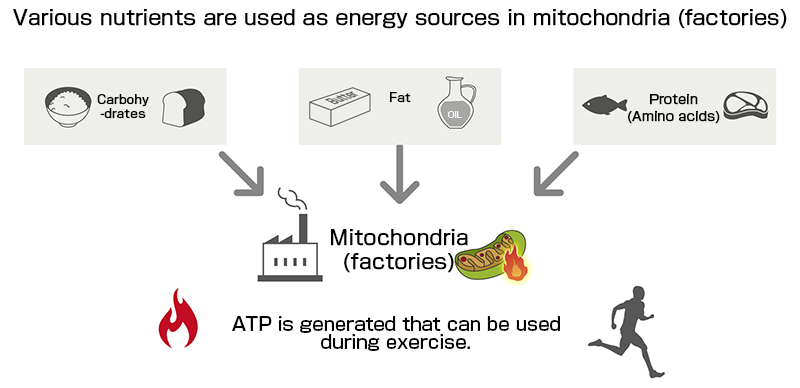
The food we eat every day contains a variety of nutrients: carbohydrates, lipids, and proteins (amino acids). These nutrients are used to create the energy our bodies need every day (Figure 1).
Nutrients are used as an energy source, but they cannot be used as is; they must be converted into a substance called ATP (adenosine triphosphate).
Figure 1
Mitochondria are responsible for energy production
The "mitochondria" in the cells of the body act as factories that produce ATP from nutrients. In other words, the amount of energy produced changes depending on the function of mitochondria.
The main sources of energy during exercise are carbohydrates and lipids, and endurance sports in particular consume a lot of energy. Using these two energy sources effectively is important for improving performance. During exercise, using more fatty acids, which are made by breaking down lipids, as an energy source helps conserve glycogen (stored carbohydrates) in the body.
In other words, increasing the amount of energy available may help improve endurance. Therefore, improving the function of mitochondria, which produce ATP, will lead to ideal performance.
Decrease in energy production due to exercise stress
Mitochondria are the factories that produce ATP. Continuous exercise can increase the amount of ATP and improve its function. When the function of mitochondria in muscle cells is improved, the amount of ATP produced increases. In other words, improved mitochondrial function leads to increased endurance (Figure 2).
Figure 2
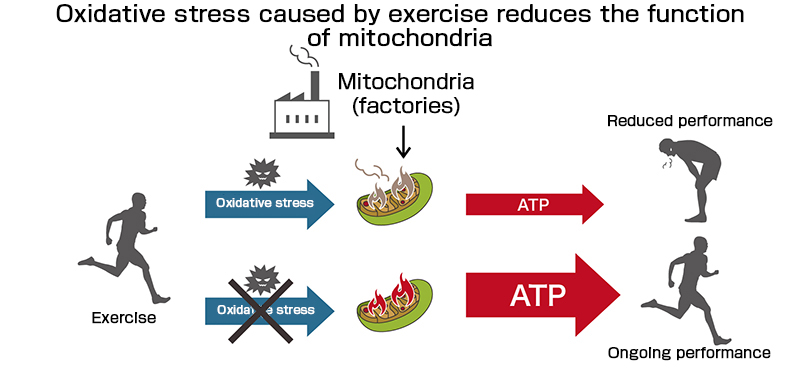
However, mitochondria have a natural enemy: "stress" caused by exercise. When mitochondria are stressed, their function declines. This in turn reduces the amount of ATP produced by mitochondria. The amino acid "cystine" can be relied upon to avoid such problems as much as possible.
Antioxidant effects and mitochondrial protection of cystine
"Cystine" is made up of two "cysteines," one of the 20 amino acids that make up the body. It is an amino acid found in large amounts in foods such as chicken, and has the function of protecting against various stresses (Figure 2).
Figure 3

Produces glutathione to protect cells
"Cystine" creates a substance called glutathione, which protects the body from stress. There is data that shows that glutathione protects the function of mitochondria, allowing lipids to be used as an energy source and reducing fatigue during exercise.
Cystine suppresses oxidative stress and maintains energy efficiency
Therefore, we investigated the effect of cystine on the energy produced by muscles. As shown in the figure, we found that cystine suppresses the decrease in glutathione caused by oxidative stress. We also found that it increases the amount of energy produced.
Cystine enhances fatty acid utilization during exercise
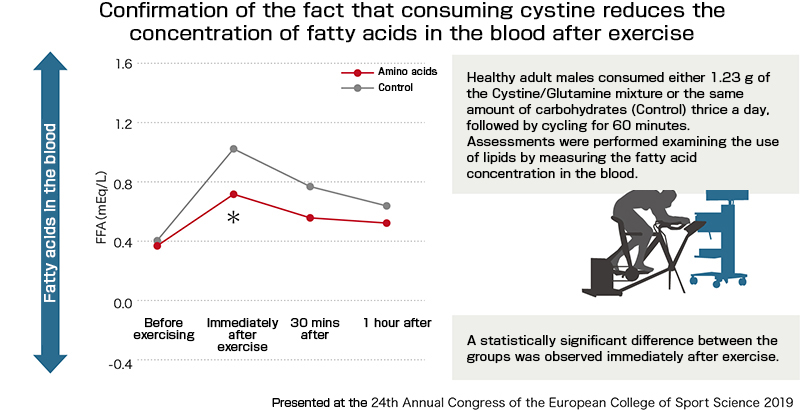
Next, we investigated the effect of cystine on the utilization of fatty acids during exercise in healthy general men (Figure 4). The group taking cystine showed lower levels of fatty acids in the blood after exercise compared to the group not taking cystine.
This was thought to be the result of cystine increasing fatty acid utilization, resulting in more fatty acids being used. In other words, cystine is thought to have the effect of increasing fatty acid utilization during exercise.
Figure 4
Cystine reduces fatigue during exercise
We investigated how cystine increases the use of fatty acids and thus affects the sense of fatigue during exercise.
Healthy men were asked, "How hard was the exercise?" while exercising for about an hour.
Figure 5
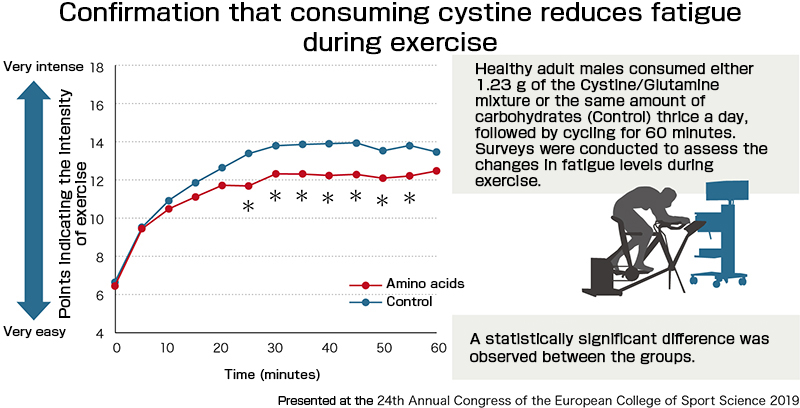
As shown in Figure 5, the exercise felt hard immediately after starting, and the sense of fatigue increased as the exercise time continued. However, the group taking "Cystine" felt less tired 25 minutes after exercise compared to the group not taking "Cystine".
In other words, it is thought that taking cystine may reduce fatigue during exercise and help maintain performance.
Cystine protects mitochondrial function and supports energy production
No matter what kind of exercise you do, energy is essential to perform at your best. The mitochondria in your cells create ATP to use the nutrients you eat as an energy source. However, the stress placed on your body during exercise weakens this function. The amino acid cystine suppresses this stress, enhances mitochondrial function, and increases the available energy sources, reducing fatigue during exercise.
Combine with training to improve endurance
Improving endurance is one of the most important goals for athletes. In sports where you want to perform at your best, using energy from "Cystine" can be helpful in addition to training!